In water environment monitoring, chlorophyll content serves as a core indicator for evaluating water eutrophication and algae growth. With the popularization of IoT and online monitoring technologies, digital chlorophyll sensors equipped with RS485 interfaces have become the mainstream in the market. However, when faced with numerous brands and parameters, how should buyers make informed choices? Today, we will discuss the key points that must be considered when purchasing
RS485 water quality chlorophyll sensors.
1. Why Prioritize the RS485 Digital Interface?
When selecting sensors, you will first encounter the choice between "analog signals" and "digital signals". Outdated analog sensors are susceptible to line attenuation and electromagnetic interference, leading to data drift. It is recommended to prioritize digital sensors with RS485 output.
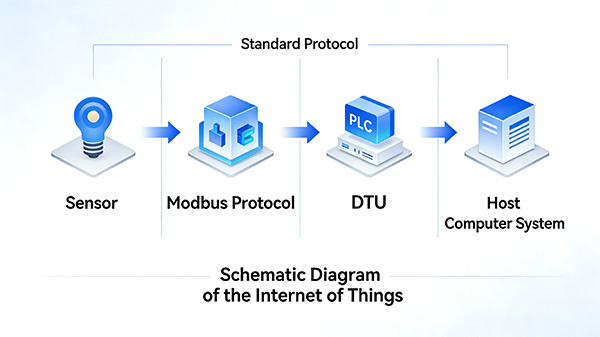
Sensors adopting the RS485 interface and supporting the standard Modbus protocol offer distinct advantages:First, they enable reliable long-distance transmission (up to thousands of meters), making them suitable for extensive outdoor water deployment;Second, digital signals feature strong anti-interference capability and high data accuracy;Most importantly, the standard Modbus protocol allows seamless integration of sensors into existing PLC, DTU or host computer systems without cumbersome secondary development, supporting plug-and-play functionality.
2. Core Technical Indicators: Do Not Only Focus on Measuring Range
2.1 Detection Principle and Accuracy
Currently, mainstream sensors adopt the fluorescence method. Compared with the traditional extraction method, it boasts high real-time performance, reagent-free operation and non-destructive sampling. When purchasing, in addition to the conventional measuring range, more attention should be paid to the detection limit and resolution. For drinking water sources or sensitive water body monitoring, it is advisable to select equipment with high resolution and low detection limit to ensure timely detection of subtle algae changes.
2.2 Automatic Cleaning Function Is Essential
Biofouling is the primary challenge in online water quality monitoring. In eutrophic water bodies, once the optical window of the sensor is covered by algae or sludge, the data will suffer severe drift. Therefore, it is imperative to select sensors equipped with a physical cleaning brush. High-quality sensors are fitted with an integrated self-cleaning brush that regularly scrapes the optical surface, which not only prevents biofouling but also eliminates bubble interference, significantly reducing the frequency of manual maintenance.
3. Physical Materials and Installation Adaptability
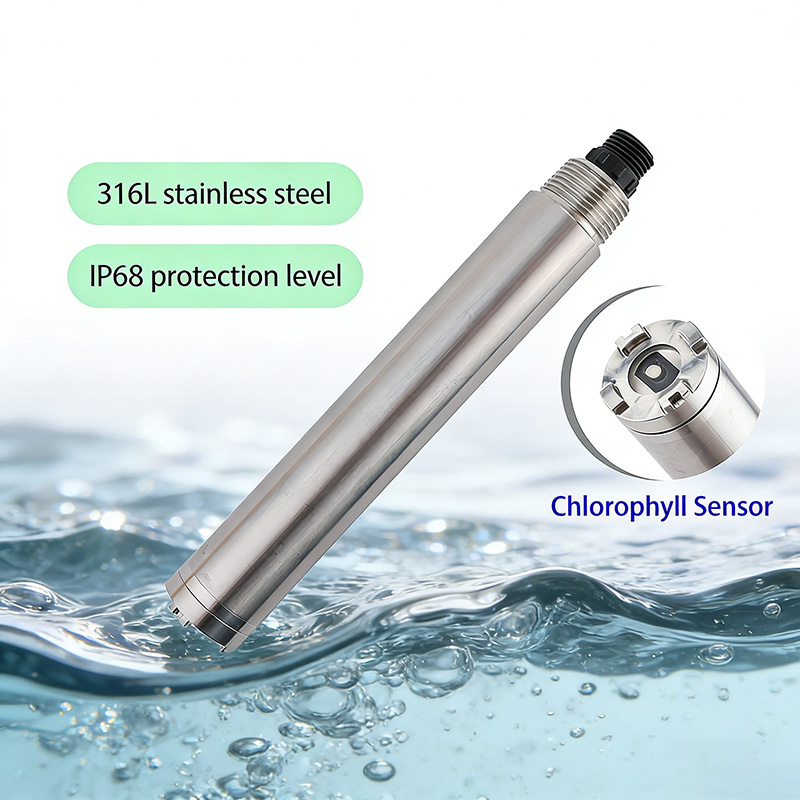
Sensors need to be immersed in water for long periods, so their materials determine their service life. 316L stainless steel is the mainstream choice for the housing due to its excellent corrosion resistance; for highly corrosive water bodies or marine environments, higher-grade titanium alloy materials can be considered.
Meanwhile, attention should be paid to the protection level, with IP68 as the basic requirement to ensure stable operation of the sensor underwater at depths of 10 meters or even deeper. In addition, selecting the appropriate installation method and threaded interface according to your monitoring scenario (buoy, platform or pipeline) is a detail that cannot be overlooked.
4. Choosing a Solution Provider: After-Sales Service Goes Beyond Repairs
Purchasing sensors is essentially an investment in "data stability". If you only source equipment from a trading company, once problems such as abnormal data, communication interruption or installation incompatibility occur on-site, you often have to wait passively for factory repair, which is time-consuming and labor-intensive.
It is recommended to prioritize purchasing from "solution providers" with system integration capabilities. The value of such suppliers lies in:
-
On-site Commissioning and Training: Solution providers not only supply sensors but also conduct on-site commissioning according to your specific scenarios (e.g., limited power supply for buoys, mismatched RTU communication parameters), and provide hands-on training for operation and maintenance personnel to master calibration and cleaning techniques.
-
Data Abnormality Diagnosis: When monitoring data mutates, solution providers can quickly determine based on experience whether it is real data caused by algal blooms or "false values" due to foreign matter blocking the sensor, avoiding invalid workload caused by false alarms.
-
Long-term Operation and Maintenance Support: High-quality solution providers establish equipment archives, offer remote firmware upgrades, regular calibration reminders, and even assist in analyzing data trends and providing water quality treatment advice when you encounter complex water quality issues.
Choosing a reliable solution provider is equivalent to engaging an "on-call technical consultant" for your monitoring system.
Summary
To sum up, the core of purchasing an RS485 chlorophyll sensor lies in selecting the right communication protocol (RS485 + Modbus), adopting the fluorescence technology, equipping with a standard automatic cleaning brush, and matching appropriate materials and installation methods. Meanwhile, remember to screen suppliers and choose solution providers that offer full-life-cycle technical support. This ensures authentic and reliable monitoring data, enabling your online monitoring system to truly fulfill its value of "ecological early warning".
https://www.zonewuiot.com/rs485_c15